Browser Puzzle Adventures Where Young Players Combine Reflexes with Strategic Teamwork
Drew Schmitz · Jun 26, 2026
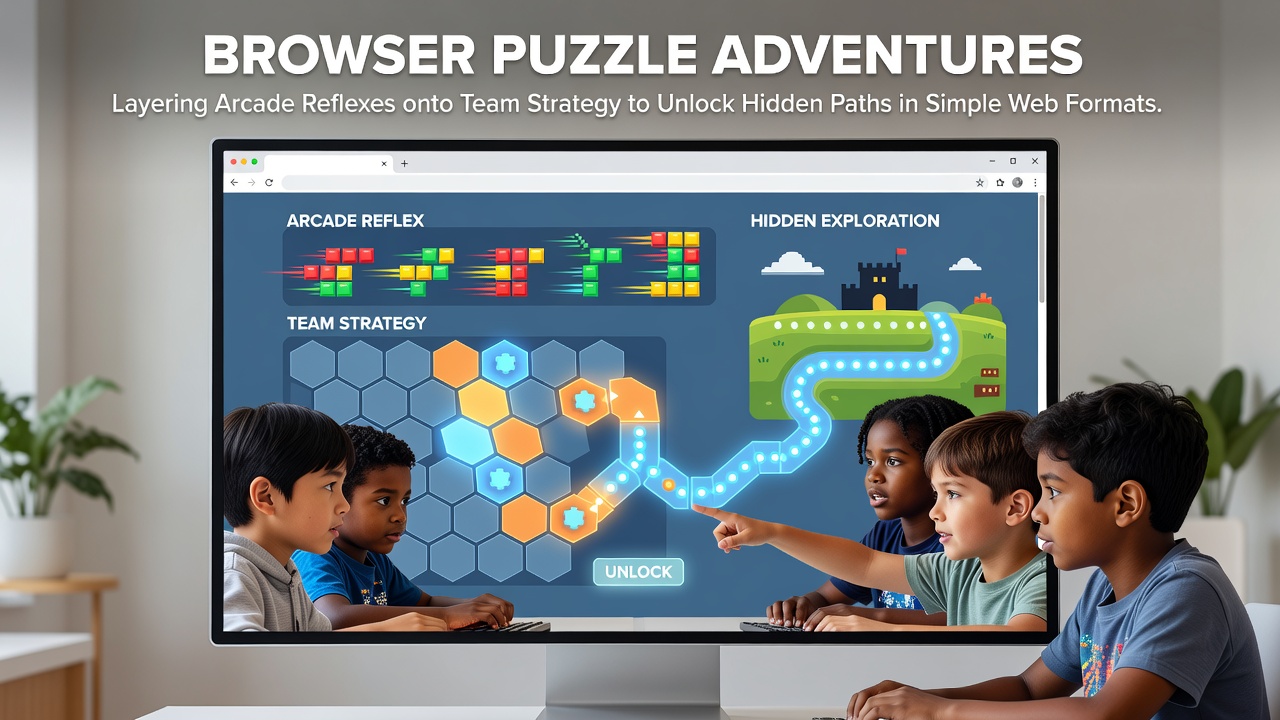
Browser Puzzle Adventures Where Young Players Combine Reflexes with Strategic Teamwork
Browser puzzle adventures let children merge quick arcade reflexes with coordinated team planning, and these experiences unfold in straightforward web formats that require nothing beyond a standard browser. Players navigate timed challenges while discussing routes in real time, which opens concealed exploration paths that stay locked until specific combinations of speed and strategy align. Simple HTML5 and JavaScript structures power most titles, so participants join sessions without downloads or complex installs. Designers build these games around modular levels where each section demands a different skill emphasis. One segment might require rapid key presses to dodge obstacles, while the next pauses for group discussion about which path to unlock next. The layering happens naturally because the browser environment updates instantly, allowing reflexes to feed directly into strategic choices without lag or extra software layers.Mechanics That Layer Skills Across Sessions
Research from the Interactive Software Federation of Europe shows browser titles increasingly incorporate real-time synchronization tools that track both individual reaction times and collective decision logs. In practice, a team might clear an arcade-style gauntlet in under thirty seconds, then use the data from those moves to calculate optimal routes through a hidden map section. Observers note that the web format keeps resource demands low, which means schools and community centers can run multiple simultaneous groups without specialized hardware.
What's interesting is how the hidden paths function as rewards for balanced performance rather than isolated achievements. Data indicates that when one player handles timing sequences while others map out long-term tactics, completion rates rise across age groups between eight and twelve. The browser records these interactions through lightweight APIs, creating persistent team profiles that carry over between sessions without storing heavy files locally.
Participation Trends Through Mid-2026
By June 2026, several platforms documented steady growth in browser-based adventure titles that emphasize cross-skill layering. Figures from the Entertainment Software Association reveal that monthly active users in the youth category increased notably in regions with strong school internet access. Teams often meet during scheduled after-school windows, where they practice combining split-second responses with shared planning boards that appear directly in the browser window.
Take one documented case where a group in a Canadian after-school program unlocked three previously hidden zones after refining their handoff between reflex phases and strategy huddles. The web interface displayed live metrics that helped them adjust without leaving the game environment, which kept momentum high and reduced setup time between rounds.

Interface Features That Support Skill Integration
Developers embed chat overlays and shared cursors that appear only when the group reaches decision points, preventing distraction during fast reflex segments. According to reports compiled by the Interactive Software Federation of Europe, these selective interface elements correlate with higher retention because they match the pacing of each challenge type. The underlying code remains minimal, often under two megabytes per title, which allows smooth operation even on older school computers.
Path-unlocking sequences typically require inputs from multiple players within narrow time windows, forcing coordination that blends arcade speed with tactical foresight. Researchers have observed that children quickly learn to assign roles based on individual strengths, such as one participant managing rapid inputs while another tracks overall progress on a simple in-browser map. This division emerges organically from the game structure rather than from external instructions.
Technical Accessibility Across Devices
Simple web formats rely on standard browser capabilities like canvas rendering and WebSocket connections, which most modern devices support without additional plugins. Schools in various regions report consistent access because updates deploy server-side, eliminating the need for individual device maintenance. The same architecture that keeps file sizes small also enables rapid iteration, so designers can test new path combinations based on aggregated play data collected through anonymous browser sessions.
Conclusion
Browser puzzle adventures continue to evolve by presenting clear opportunities for children to layer arcade reflexes onto team strategy, all within accessible web environments that prioritize straightforward participation. As platforms refine synchronization features and data tracking through 2026, the format supports ongoing exploration of how different skill sets interact to reveal new paths. Those who've studied these systems point to the low technical barriers as a key factor sustaining broad engagement across educational and recreational settings.