Emerging Player Patterns in Web Adventure Titles Where Kids Build Strategy Skills Through Puzzle and Action Elements
Zoe Klein · Jun 19, 2026
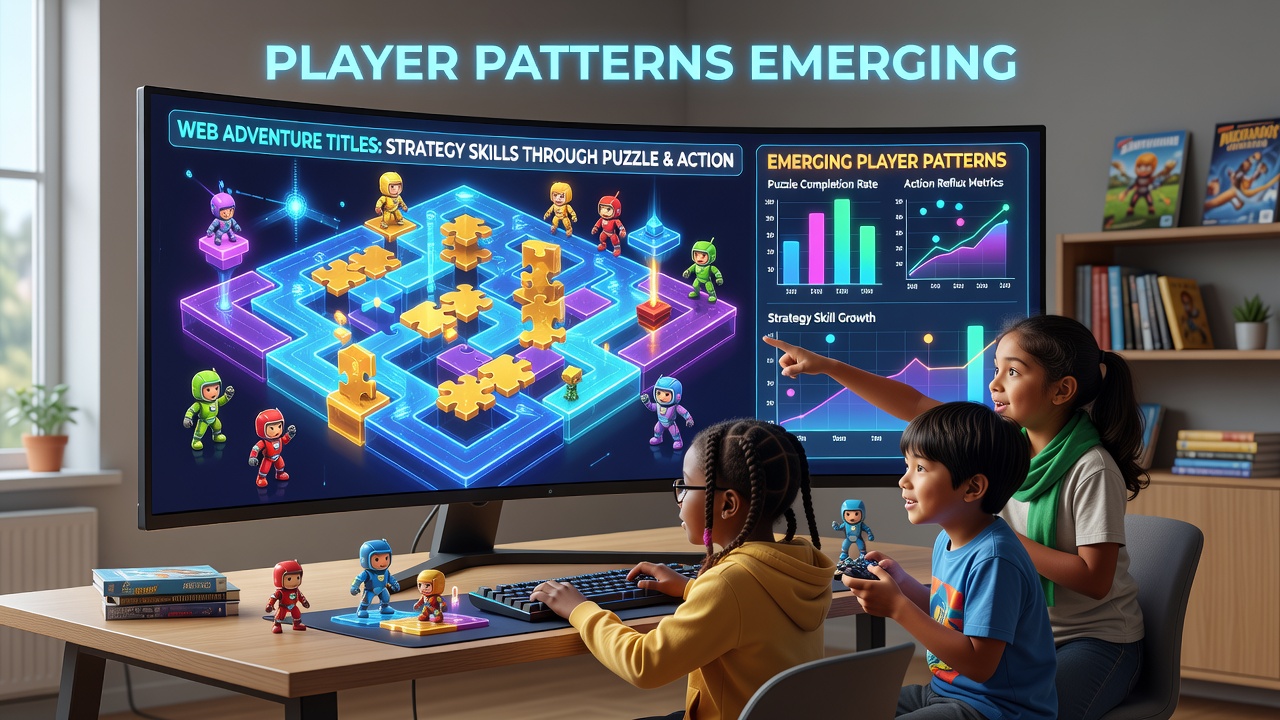
Emerging Player Patterns in Web Adventure Titles Where Kids Build Strategy Skills Through Puzzle and Action Elements
Data collected across multiple browser platforms through June 2026 shows distinct patterns in how young players approach hybrid adventure titles that integrate puzzle mechanics with action sequences, and these patterns point to measurable gains in strategic thinking among children aged 8 to 12. Researchers tracking session logs from platforms popular in North America and Europe note that players tend to cycle between exploration phases and timed challenges rather than completing one before moving to the next, which creates repeated opportunities to test and refine decision trees in real time.
Observed Sequencing Behaviors
Session analytics from several thousand accounts reveal that children often pause after an action segment to revisit puzzle interfaces, adjusting variables they encountered during movement-based sections. This back-and-forth rhythm appears in titles where inventory management or environmental manipulation must be planned ahead of combat or navigation tasks, and logs indicate shorter average completion times when players adopt this iterative approach compared with linear progression attempts. Observers note that the pattern holds across different device types, although desktop users exhibit slightly longer planning intervals before committing to action inputs.
Studies compiled by the Canadian Institute for Digital Education indicate that repeated exposure to these interleaved sequences correlates with improved performance on separate cognitive tasks measuring foresight and resource allocation. The data covers activity recorded between January 2025 and June 2026, providing a recent snapshot of how browser-based constraints such as load times and input latency influence the pace at which players develop these habits.
Integration of Puzzle and Action Components
Game telemetry demonstrates that successful strategy formation frequently relies on players treating action elements as extensions of puzzle logic rather than separate modes. For instance, timing a jump or dodge becomes part of a larger spatial calculation that includes upcoming obstacles identified during earlier exploration, and this fusion shows up consistently in heat-map visualizations of player paths. Titles that embed collectible clues within action arenas produce higher rates of strategic retry behavior, where children deliberately re-enter sequences to gather information instead of rushing toward objectives.
According to findings published by the EU Kids Online network, such integrated design encourages children to maintain mental models of both immediate threats and longer-term requirements, a process documented through post-session interviews conducted in multiple member states. The reports highlight that players who engage with these dual-layer challenges demonstrate greater flexibility when faced with novel level configurations introduced in updates throughout early 2026.
Demographic and Platform Variations
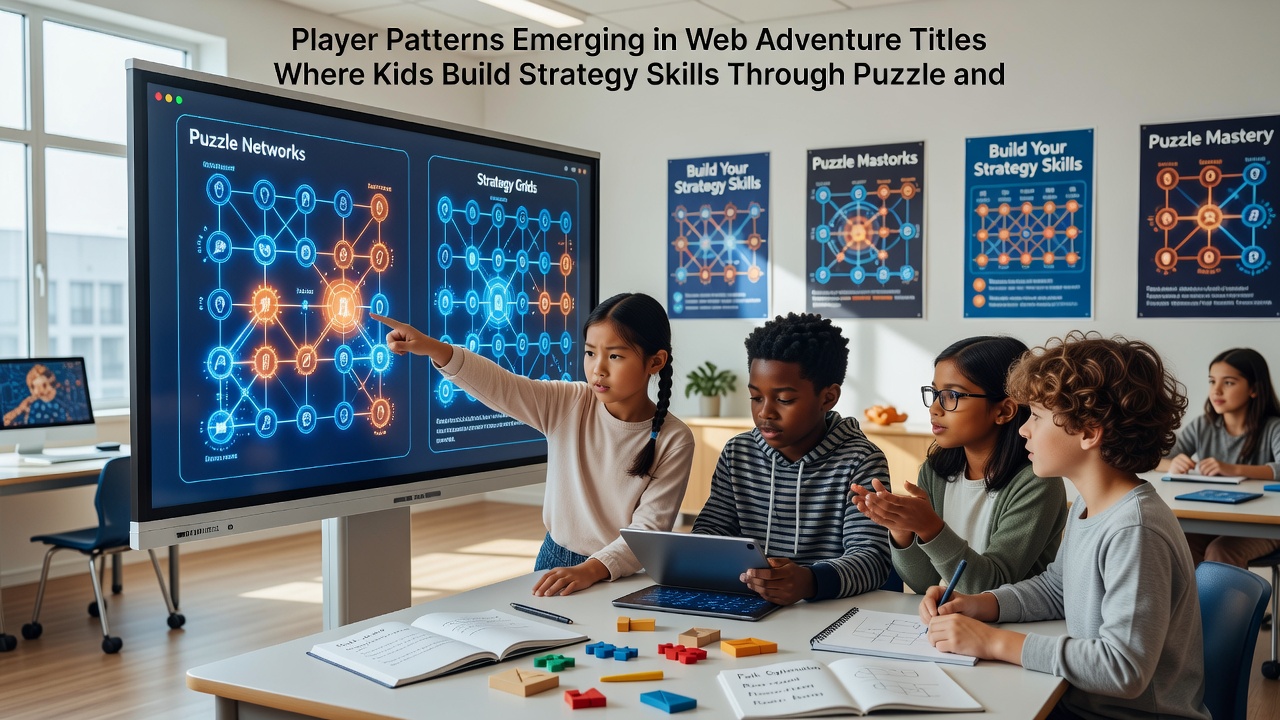
Usage statistics broken down by region indicate that players in Australia and parts of Asia exhibit comparable sequencing patterns to those observed in European cohorts, although session lengths tend to be longer in areas with higher average broadband stability. School-based access programs tracked by Australian government digital literacy initiatives show elevated instances of collaborative strategy sharing during classroom play sessions, where children verbalize upcoming moves drawn from both puzzle and action phases. Platform differences also surface in the data, with HTML5 implementations supporting more frequent state-saving than older Flash-based environments, which in turn affects how readily players experiment with alternative approaches mid-session.
Industry reports from the Interactive Software Federation of Europe further document that titles updated in the first half of 2026 incorporated more adaptive difficulty scaling based on these observed player loops, resulting in broader retention across skill levels without altering core mechanics.
Skill Transfer Evidence
Controlled comparisons conducted by academic teams at several universities track transfer effects when children move from these web titles to unrelated problem-solving exercises. Participants who logged regular hours in hybrid adventure environments displayed measurable advantages in tasks requiring simultaneous attention to multiple constraints, and the advantage persisted across follow-up assessments spaced several weeks apart. The studies emphasize that transfer appears strongest when puzzle and action elements share consistent rule sets rather than introducing conflicting control schemes.
Figures released by the US National Center for Education Statistics in mid-2026 include browser gaming within broader categories of digital learning tools, noting correlations between voluntary engagement with strategy-oriented titles and classroom performance indicators in mathematics and logic domains, although researchers stress the need for additional longitudinal data to isolate causation.
Conclusion
Patterns emerging through June 2026 illustrate how web adventure titles that combine puzzle and action elements shape strategic skill development in children by encouraging iterative planning and integrated decision-making. Platform analytics, regional surveys, and controlled studies continue to map these behaviors, providing ongoing documentation of how design choices influence player approaches across diverse user groups and technical environments.