Inside the World of Browser-Based Team Play: Connecting Arcade Reflexes with Adventure Planning in Kid-Friendly Formats
Freya Roth · Jun 28, 2026
Inside the World of Browser-Based Team Play: Connecting Arcade Reflexes with Adventure Planning in Kid-Friendly Formats
Browser-based team play environments have expanded notably in recent years as developers integrate fast-paced arcade mechanics with structured adventure planning elements designed specifically for younger audiences. These platforms operate directly through web browsers without requiring downloads or installations and they allow multiple participants to join sessions from various locations simultaneously. Data from industry tracking services shows participation rates climbing steadily through 2025 with projections indicating further growth by June 2026 as schools and community programs adopt these tools for structured play sessions.
Mechanics That Blend Reflexes and Planning
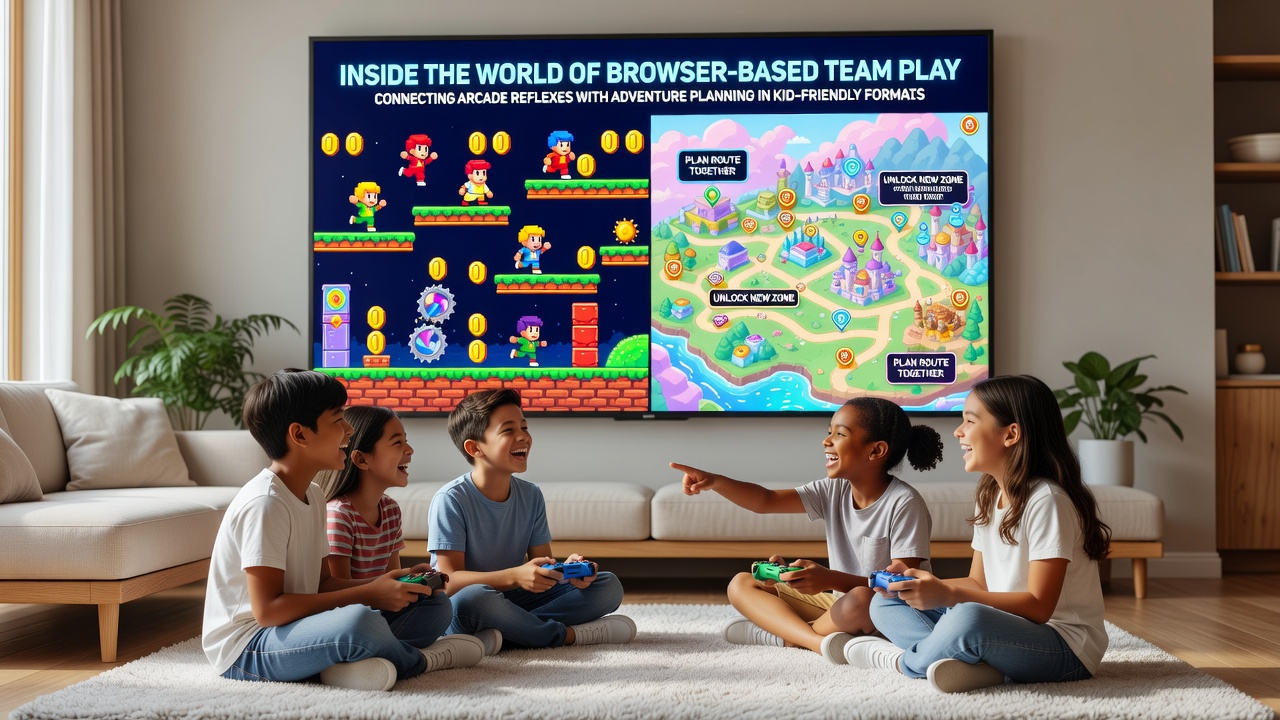
Game designers construct levels where players must execute rapid timing-based actions such as dodging obstacles or collecting items while simultaneously coordinating group decisions about route selection and resource allocation. This layering occurs within shared interfaces that update in real time so one participant's quick reaction can influence the entire team's progress toward an objective. Researchers at institutions focused on digital learning have documented how these dual demands encourage participants to alternate between immediate responses and longer-term tactical considerations within single play sessions.
Interface Features Supporting Young Teams
Developers incorporate visual cues and simplified controls that accommodate varying skill levels while maintaining challenge across age groups. Color-coded indicators highlight urgent actions alongside maps that display planned paths chosen by the group. According to reports from the Australian eSafety Commissioner on children's online interactions these design choices reduce cognitive overload and support collaborative decision-making without requiring advanced technical proficiency.
Team Coordination Patterns Observed in Practice
Participants frequently divide roles during sessions with some focusing on navigation and timing sequences while others manage inventory tracking and objective sequencing. Studies conducted through university research programs in Canada reveal that repeated exposure to these formats correlates with measurable improvements in group communication efficiency among elementary-aged players. Sessions often incorporate adjustable difficulty parameters allowing facilitators to scale complexity based on group readiness.
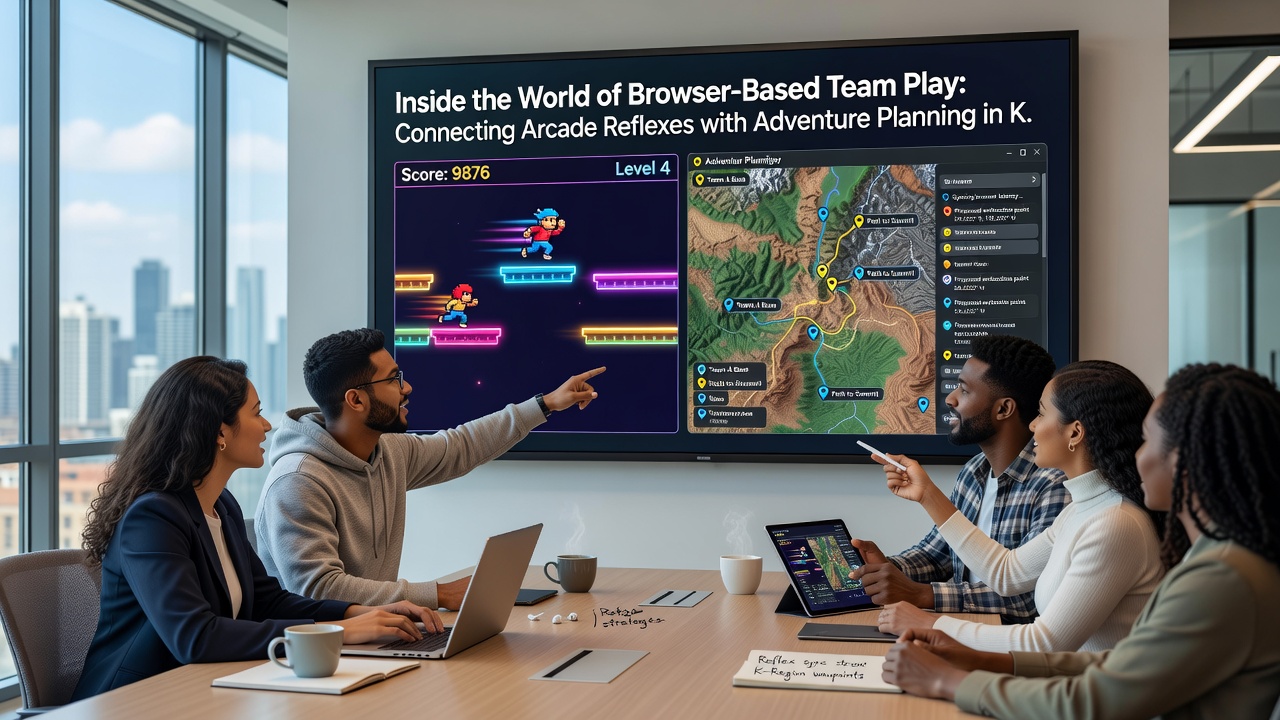
Platforms track aggregate performance metrics across multiple rounds and present results in formats accessible to educators and parents. These records illustrate how teams refine their approaches over successive attempts by adjusting both reflex execution and planning sequences. Observers note that browser accessibility enables consistent participation across diverse hardware setups which broadens reach compared to dedicated console or application-based alternatives.
Development Trends Through Mid-2026
By June 2026 several major browser game portals had introduced modular toolkits allowing educators to customize scenarios that align with curriculum objectives while preserving core arcade-adventure integration. Industry associations such as the Entertainment Software Association have compiled usage statistics demonstrating increased adoption in after-school programs across multiple regions. These updates maintain compatibility with standard web standards ensuring broad device support without specialized hardware.
Security protocols embedded in these environments include moderated chat functions and progress monitoring features that align with guidelines from regulatory bodies in the European Union concerning digital content for minors. Developers continue refining synchronization algorithms to minimize latency during group activities which supports smoother coordination across varying connection speeds.
Skill Integration Across Play Formats
Evidence from longitudinal observations indicates that repeated engagement helps participants develop simultaneous attention to immediate stimuli and sequential task management. Game structures often embed tutorial sequences that introduce mechanics progressively allowing teams to build familiarity before advancing to combined challenges. Reports compiled by research groups at institutions in the Asia-Pacific region document similar patterns among participants in multilingual environments where visual and timing elements reduce language barriers.
Accessibility and Reach Considerations
Browser delivery removes barriers associated with software installation or account creation for many users and platforms frequently offer guest modes alongside optional registration. This approach accommodates classroom settings where multiple devices access content simultaneously. Data compiled through international digital inclusion initiatives shows higher participation rates in regions with reliable internet access compared to areas dependent on application stores or physical media distribution.
Conclusion
Browser-based team play formats that merge arcade reflexes with adventure planning continue evolving through technical refinements and expanded educational applications. Current implementations demonstrate measurable support for collaborative skill development among young participants while operating within established web accessibility frameworks. Ongoing data collection through June 2026 and beyond will clarify long-term patterns in how these environments influence group dynamics and individual response capabilities across diverse settings.