Interface Innovations Enabling Fluid Shifts Between Reflex-Driven Arcade Modes and Deliberate Strategy Planning in Children's Multiplayer Web Adventures
Rosa Vogel · Jul 19, 2026
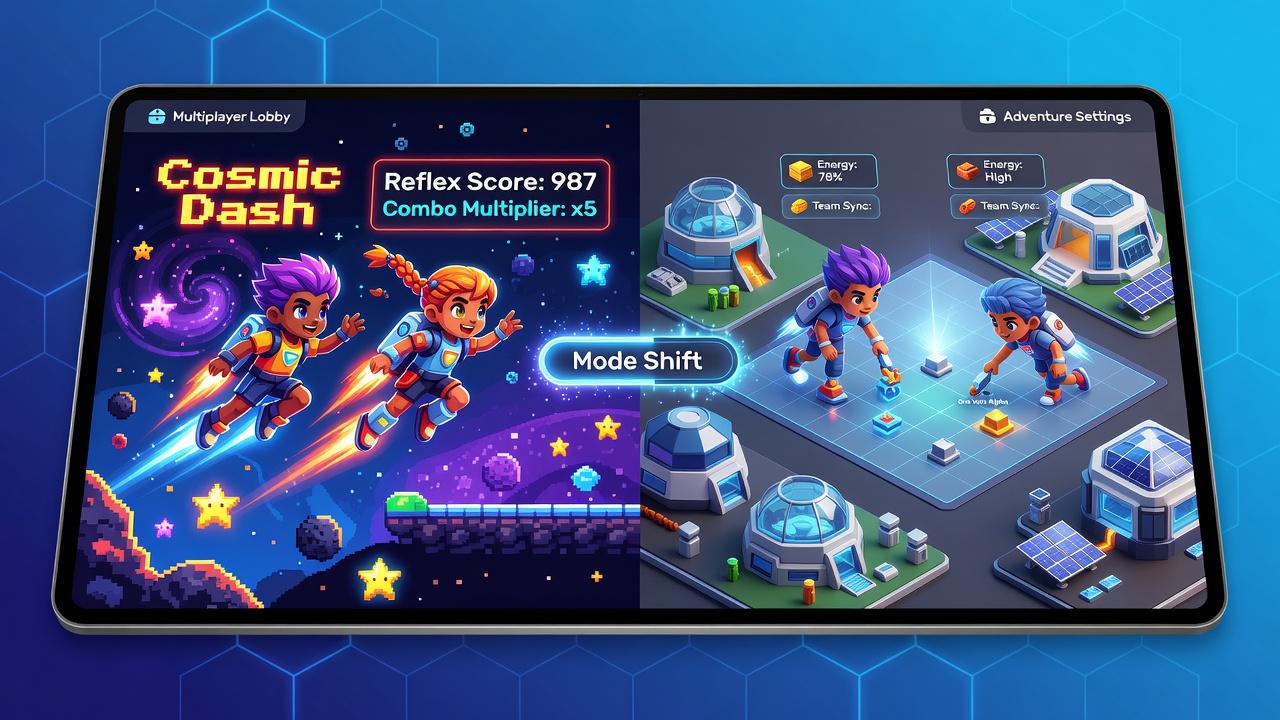
Interface Innovations Enabling Fluid Shifts Between Reflex-Driven Arcade Modes and Deliberate Strategy Planning in Children's Multiplayer Web Adventures
Web-based multiplayer adventures for children have incorporated interface designs that allow players to move between reflex-based arcade sequences and deliberate strategy sessions without interrupting the shared session flow, and developers have refined these systems through iterative updates that respond to observed player behaviors across distributed networks. These innovations rely on modular UI components that detect input patterns in real time while maintaining consistent state synchronization for all participants in a session.
Core Mechanisms of Mode Transition
Interfaces in these environments use layered event handlers that prioritize timing-sensitive inputs during arcade phases yet switch priority to menu-based selection tools when players enter planning intervals, and this adjustment occurs through context-aware scripts that evaluate group activity metrics such as average response latency and coordination frequency. Data packet protocols sort incoming actions by urgency so that reflex commands receive immediate processing while strategy inputs queue for collective review, which prevents desynchronization during rapid exchanges.
Observers note that adaptive toolbars expand or collapse based on session phase signals sent from the central server, and these changes appear simultaneously across all connected browsers because the system broadcasts state updates in compressed packets that account for variable connection speeds typical in school or home settings. One documented case from European testing environments showed that such designs reduced transition delays to under 200 milliseconds on average when groups shifted from obstacle navigation to resource allocation tasks.
Integration with Multiplayer Coordination
Shared canvases display both immediate action overlays and persistent planning grids at the same time, allowing participants to toggle visibility through simple gesture or click inputs that the interface registers without pausing the overall game loop. Researchers have tracked how these dual-view layouts support team roles where some children handle quick reactions while others manage longer-term positioning, and synchronization protocols ensure that changes made in the planning layer propagate instantly to the arcade layer for all users.
According to findings from the OECD's education and skills reports on digital environments, children using these hybrid interfaces demonstrate measurable improvements in task-switching efficiency after repeated sessions, with data collected from programs across member countries indicating consistent patterns in group decision accuracy. The same reports highlight that interface cues such as color-coded urgency indicators help younger players distinguish between modes without explicit instruction.
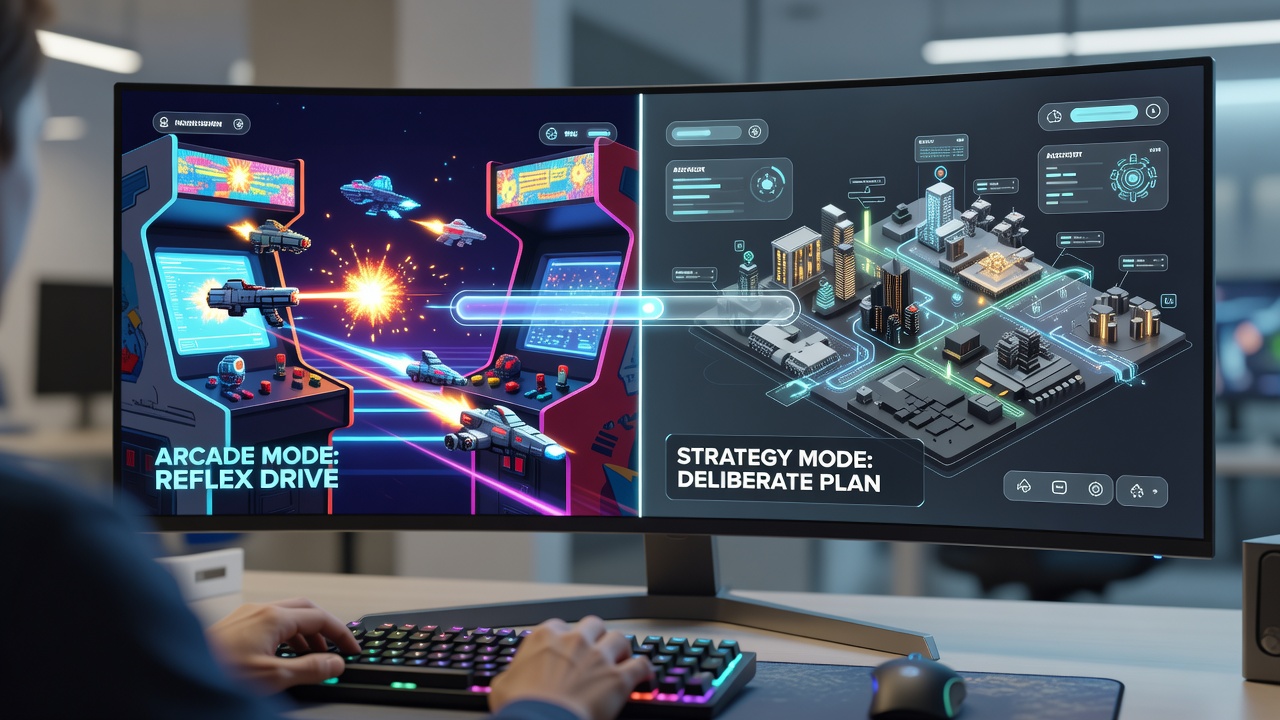
Developments Observed Through Mid-2026
Platform updates rolled out in July 2026 introduced refined gesture recognition layers that interpret swipe velocity to determine whether a player intends an arcade dodge or a strategy map adjustment, and these layers integrate with existing browser APIs to avoid additional plugin requirements. Industry testing conducted by the Canadian Digital Literacy Alliance confirmed that the updates maintained compatibility across major browsers while preserving low latency for groups of up to eight simultaneous users.
Engineers addressed edge cases where network jitter could disrupt planning sequences by implementing predictive buffering that anticipates command clusters and pre-renders likely outcomes, which keeps the visual feedback continuous even when individual packets arrive out of order. This approach builds on earlier work in distributed systems yet tailors packet prioritization specifically to the mixed timing demands of child-focused adventures.
Impact on Group Learning Sessions
Schools and after-school programs have adopted these interfaces because they allow a single session to alternate between high-energy segments and reflective intervals without requiring separate applications or logins. Data from Australian government education technology evaluations shows that sessions incorporating fluid mode shifts correlate with higher completion rates for collaborative objectives compared with single-mode formats, although the precise causal factors remain under further study.
Interface designers continue to refine accessibility options such as adjustable input sensitivity and simplified planning palettes that accommodate varying motor skills and cognitive processing speeds among participants. These adjustments appear as optional toggles that do not alter the core synchronization logic, thereby preserving fairness across diverse player groups.
Conclusion
Interface systems supporting seamless shifts between reflex-driven and strategy-oriented play represent a sustained area of development in children's multiplayer web adventures, with ongoing refinements driven by performance metrics gathered from live sessions worldwide. Continued attention to synchronization reliability and input adaptability will shape how these environments evolve in subsequent platform iterations.