Resource Allocation Patterns Across Genre Hybrids in Web Multiplayer Formats for Youth
Zoe Klein · Aug 11, 2026
Resource Allocation Patterns Across Genre Hybrids in Web Multiplayer Formats for Youth
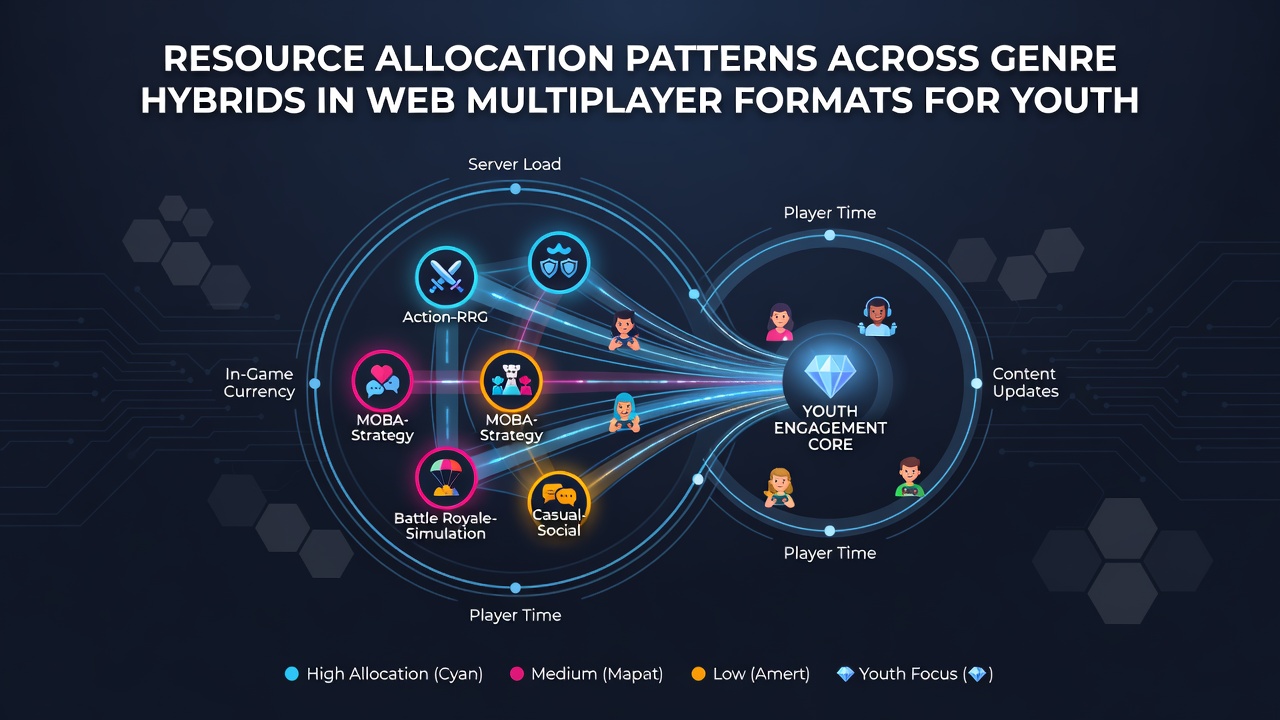
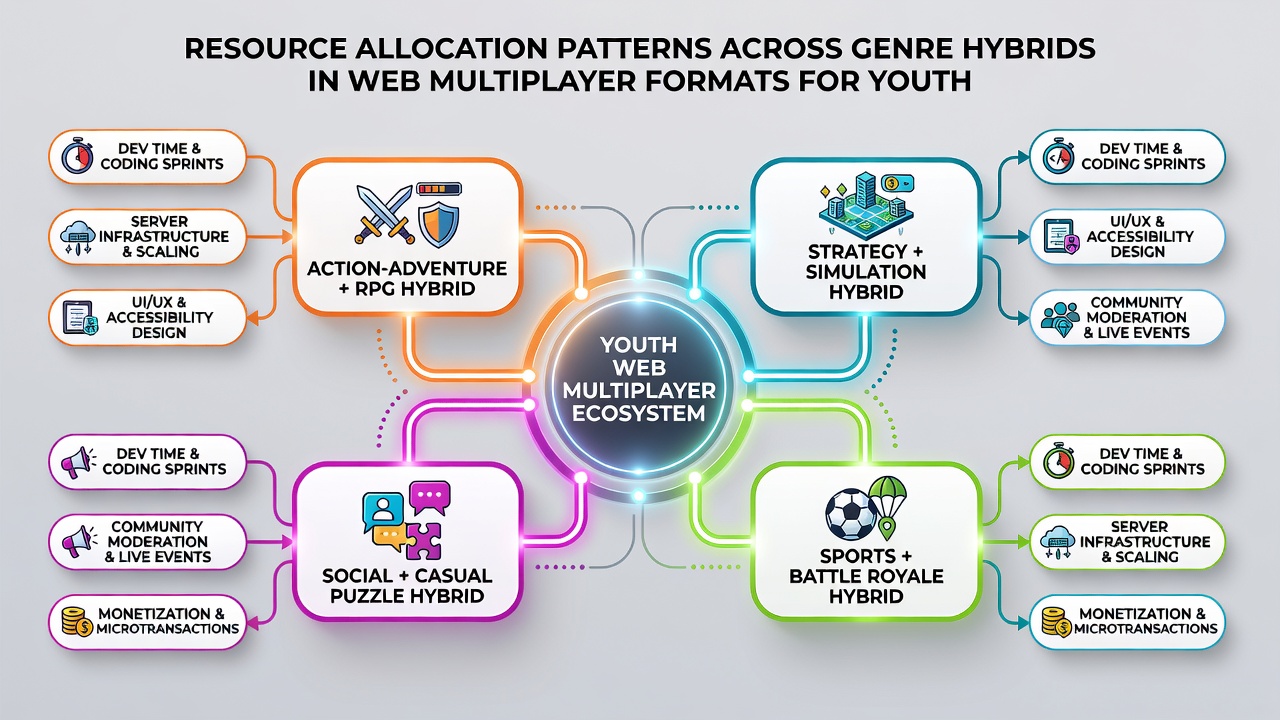
Web-based multiplayer formats that blend multiple genres have expanded steadily since the early 2020s, and data from platform analytics show young users managing limited pools of attention, time, and in-game assets across puzzle, action, and planning components. Resource allocation in these environments refers to the measurable distribution of player effort among competing demands, whether those demands involve timing-based reflexes during arcade sequences or deliberate selection of shared assets during strategy phases. Observers note that browser interfaces reduce installation barriers, which allows session data to accumulate across larger populations and reveals consistent patterns in how school-aged participants divide their focus.
Observed Shifts in Attention During Hybrid Sessions
Studies tracking mouse movements and click sequences indicate that players aged 8 to 14 frequently alternate between rapid response segments and slower decision intervals within the same continuous session. When a puzzle element appears inside an otherwise action-driven lobby, the average dwell time on informational overlays increases by measurable margins before the player returns to movement controls. Researchers examining server logs from distributed browser environments have documented that these transitions occur more smoothly when visual cues remain consistent across mode changes, reducing the cognitive overhead of reorienting to new rule sets.
August 2026 brought updated telemetry standards from several European national statistics offices that began requiring aggregated reporting on youth digital engagement; the resulting datasets confirmed earlier academic findings that resource switching costs drop when audio and visual layers align across genre boundaries. Players therefore allocate more total play minutes to titles where interface elements persist rather than reset at each genre boundary.
In-Game Asset Distribution Trends
Genre hybrids often assign shared resources such as energy tokens, building materials, or team points that serve both immediate action goals and longer-term planning objectives. Usage logs reveal that younger participants tend to expend these assets earlier in sessions when reflex challenges dominate the opening minutes, while conservation behaviors emerge once cooperative planning phases begin. One longitudinal review of browser logs found that groups coordinating through voice or text channels preserved higher percentages of collective resources compared with solo participants, suggesting coordination itself functions as a resource management tool.
Industry reports from the Interactive Software Federation of Europe have tracked how no-install web titles adjust scarcity parameters in real time, which in turn influences allocation strategies among school-aged cohorts. Data indicate that dynamic scarcity adjustments encourage repeated short sessions rather than single extended play periods, a pattern that aligns with typical after-school time constraints.
Interface Design and Cognitive Load Management
Browser architectures allow simultaneous rendering of multiple gameplay layers, which places additional demands on attention allocation. Research published through the Australian Institute of Family Studies examined eye-tracking records from participants using shared web interfaces and documented that peripheral status displays receive more glances during planning segments than during reflex segments. This selective attention pattern suggests players actively gate resource monitoring to moments when slower decision cycles permit evaluation.
Designers have responded by introducing collapsible panels and context-sensitive tooltips that reduce visual competition. Server-side packet prioritization protocols, documented in technical papers from academic networks, help maintain consistent state across distributed clients even when timing-based events spike. These technical measures support the observed stability of resource states during rapid exchanges, allowing players to resume planning without recalculating prior allocations from scratch.
Skill Transfer Across Genre Boundaries
Evidence from after-school program evaluations indicates that repeated exposure to hybrid formats correlates with measurable improvements in task-switching speed. Participants who regularly navigate between arcade timing and group strategy elements demonstrate shorter latencies when shifting between unrelated cognitive tasks in controlled assessments. The patterns appear most pronounced when sessions incorporate explicit feedback on resource outcomes, such as post-round summaries that display how earlier choices affected later team performance.
Global coordination trends tracked by the Entertainment Software Association of Canada show increasing adoption of procedural level elements that adjust difficulty based on collective resource use, which further reinforces the need for players to monitor both personal and group inventories simultaneously. These adaptive systems generate fresh allocation challenges each session while maintaining consistent underlying metrics.
Conclusion
Resource allocation patterns in web multiplayer genre hybrids for youth continue to be shaped by interface consistency, shared asset mechanics, and the technical capacity of browsers to maintain state across distributed clients. Data collected through 2026 confirm that players develop repeatable strategies for dividing attention and conserving assets, strategies that vary systematically with session structure and group coordination levels. Continued aggregation of anonymized telemetry from regulatory and research bodies will support further mapping of these patterns across expanding user bases.